

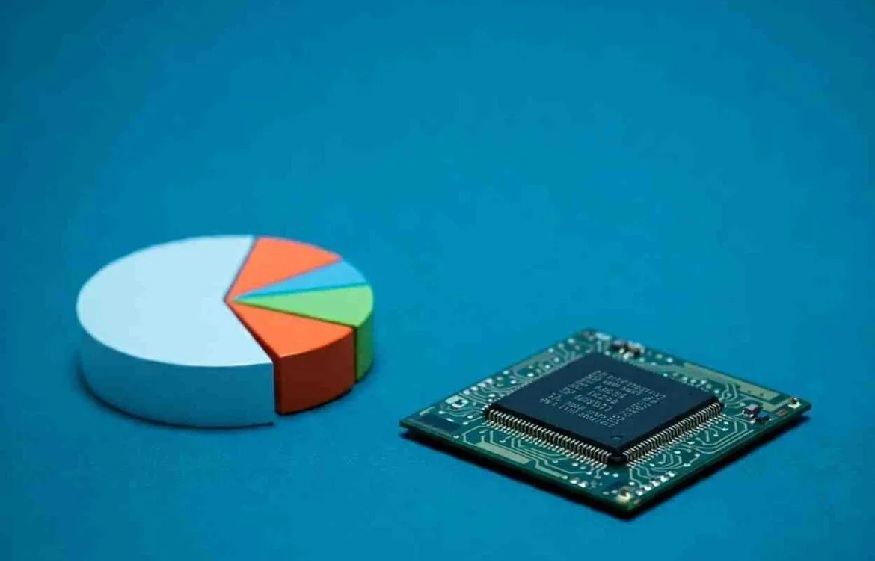
The past few years have brought growing curiosity around Semiconductor Stocks India as the government has rolled out incentive schemes aimed at attracting chip and display manufacturing investments into the country, and this evolving narrative has pulled an unlikely participant into the spotlight. Discussions on trading forums and investment platforms around the Vedanta Share Price have picked up noticeably, not because the company is primarily a technology business, but because its diversified natural resources group has publicly committed to building semiconductor fabrication capacity as part of a broader strategy to participate in the country’s electronics self-reliance mission. This combination of a legacy commodities business layered with a futuristic manufacturing ambition has made the stock a somewhat unusual but closely watched entry in conversations about the domestic chip ecosystem.
Understanding The Core Business First
Before anything else, it is crucial to understand the main sources of revenue and profits for this conglomerate holding company. The company engages in aluminium smelting, zinc and silver mining, iron ore mining, oil and gas production, and power generation. Thus, it is one of the largest diversified companies listed on the domestic stock exchange. Its mining division, which houses one of the largest primary zinc producers in the country and one of the biggest zinc-silver producers in the world, grants the company significant pricing power over the given resource.
Read More: Boost brand visibility using wellness-centric promotional products today
The company’s profits are highly dependent on commodities, specifically metals, oil and gas, and the exchange rate, which is evident from the quarterly results. At the same time, the stock provides one of the highest dividend yields among large-cap stocks on the domestic exchange, attracting many investors who are not deterred by the cyclicality of the underlying asset. The promoter’s shareholding and the company’s debt levels on both the operating company and holding company levels are also important considerations, as the conglomerate has invested significantly in its various verticals.
Electronics Manufacturing Ambitions, Explained
The conglomerate’s interest in semiconductor and display manufacturing dates back to its joint venture with a multinational electronics manufacturer that aimed to establish a large fabrication plant in western India. While the joint venture was ultimately terminated, the company remained committed to the idea of semiconductor manufacturing. Thus, the company began to prepare for semiconductor manufacturing via its captive divisions, reserving separate divisions for semiconductor and display manufacturing. The company’s goal is to produce chips for the domestic and regional markets using existing technologies at a fabrication plant, with the possibility to upgrade to new manufacturing processes in the future.
Semiconductor chips are intended for consumer electronics, mobile phones, automotive electronics, networking, and other electronic equipment, which are currently in high demand across the country. The division’s capacity utilisation is expected to follow suit, given the projected increase in demand for locally produced electronic goods. Meanwhile, the display manufacturing division will focus on glass and module making, with expectations to leverage the expertise of the company’s sister division in display glass manufacturing in one of the countries. Overall, the conglomerate has made a significant long-term commitment to electronics manufacturing.
How Investors Are Thinking About This Stock
There are two primary ways in which investors can think about this stock. The first perspective is to view the stock as a value and income play, with emphasis on the company’s commodity divisions and its ability to distribute dividends. Thus, many investors, including those who bought the stock at the market price of ₹2,500, are confident in the likelihood of receiving consistent dividends and profit from the stock’s potential upside during the commodity price cycle, as well as the company’s efforts to reduce debt.
At the same time, many investors, especially those who bought the stock at higher prices, view the company as a growth story. This perspective is based on the company’s intention to enter the domestic electronics manufacturing market with the help of its semiconductor and display manufacturing divisions. Thus, the investor considers the company’s growth potential in the long run, as well as the expected government support for local manufacturers in the form of capital subsidies and other benefits.
While both perspectives are valid and do not contradict each other, they also do not account for various risks associated with the company. First, the company’s reliance on commodities exposes it to market forces outside the company’s control. In addition, the company’s plan to develop its semiconductor and display manufacturing divisions is capital-intensive and involves substantial risk, as the establishment of a large fabrication plant, even with the help of other companies, is a complex and long-term project. With that said, the timeline for such a venture is highly uncertain, as most electronics manufacturing conglomerates currently operating in the country took significantly longer than planned to build their fabrication plants.
Read More: Business law firm: how to choose it?
A reasonable approach to investing in this stock would be to consider both the value of the company’s commodity divisions and the potential growth drivers presented by its investment in semiconductor and display manufacturing. In practice, most investors who are considering purchasing this stock would benefit from tracking the two aspects separately. In the short term, it is essential to monitor the price of commodities, as well as the company’s debt levels, for the benefit of the stock’s value. In the long term, however, investors would benefit from tracking the development of the company’s electronics manufacturing vertical, specifically the government support and technology partnerships, as well as the overall timeline for the launch of the company’s fabrication plant. After all, the company represents one of the most promising opportunities in the domestic electronics manufacturing space, which means that most market participants will benefit from closely following its developments. Needless to say, it is essential to conduct personal research and consult with a financial expert before considering an investment in this stock, given the complexity of the company’s business model.